
Fundamentals of Financial Statements Analysis
Financial Statement analysis is carried out through methods, often defined as techniques that allow knowing the entity’s transactions on its financial situation and results.
Based on the order to follow the analysis, these methods simplify and separate the financial statements’ numerical data from measuring the relationships in one period or the changes in several accounting years.
Based on the comparison of values, vertically or horizontally, analysis methods are defined as the Vertical and Horizontal methods.
Vertical Method
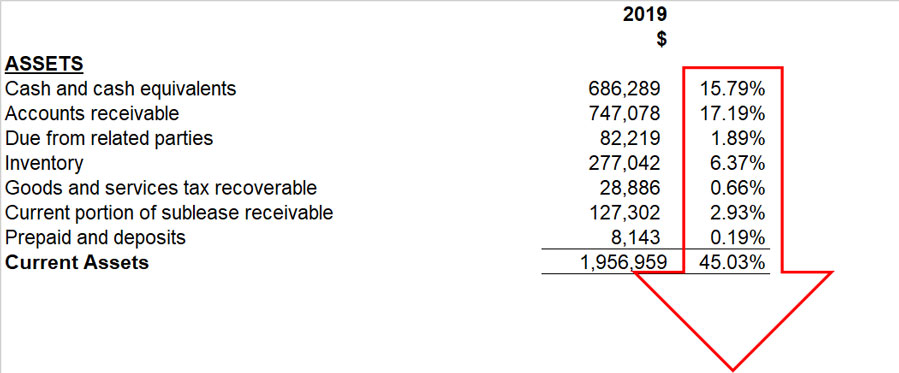
The Vertical method consists of analyzing the financial information of a single year to determine the participation of each account in the Financial Statement regarding total assets or total liabilities and equity, in the case of the Statement of Financial Position, or to the total sales, in the case of the Income Statement.
|
Statement of Financial Position Example |
 |
| Income Statement Example |
 |
The Vertical method, also called static because it applies to the same year’s financial statement, establishes comparisons between the same items vertically, studies the relationships between a company’s financial elements, and shows how values invested in it are distributed.
 |
This method allows to know which items have predominance in the Financial statement understudy, weight the percentage of existing interrelationships between entities, and see the magnitude of importance they have within the financial information.
In the Statement of Financial Position, total assets get the value of 100%, and an account’s net value is compared to establish their proportional magnitude against the total investment. The same applies to liabilities and equities accounts, whose values compared with the total liabilities plus equity has a value of 100%. In an Income Statement, net sales get the value of 100%, and the rest of the accounts is compared against this base percentage.
Thus, this method reduces the amounts of the accounts of the same nature contained in the financial statements to percentages by dividing each one by the general group’s total to which they correspond. This procedure allows determining the weight of a particular account, indicating to the analyst in which accounts weaknesses, deviations, and abnormalities are observed to take corrective measures.
Horizontal Method
The horizontal method of analizing financial statements consists of comparing several years of financial statements, item by item, in a horizontal correlative manner.
Several successive years are usually studied; generally, at least the last year’s financial statements and the immediately previous year are included. A comparative examination between the two allows identifying the evolution of the different items.
The horizontal method can be understood as a dynamic analysis technique that deals with each account’s changes or movements between one period and another. This method relates the financial modifications suffered by the company, and its represented in increases and decreases, or even percentages, allowing a good view of obtaining the changes.
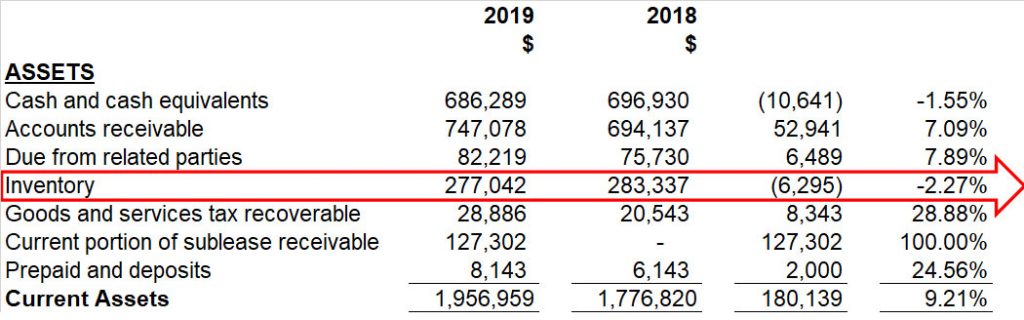 |
Analyzing increases and decreases consists of comparing homogeneous concepts of financial statements on at least two different dates locating the differences, and analyzing the figures’ behaviors from one period to another. The variation, positively or negatively, from one period to another is determined.
With these methods, business owners, banks, and others interested in understanding the financial statements can identify the variations that have occurred in the accounts in an obvious way and later determine the degree of impact on any company’s economic situation, be it small or medium.
Written by: Andrea Diaz
Related Articles:
Newsletters
No Results Found
The page you requested could not be found. Try refining your search, or use the navigation above to locate the post.
Events & Sponsorship
Talent Kids Event 2017
August 19, 2017 RGB Accounting has proudly sponsored the 2017 Talent Kids event organized by Pecora Events on August 19th. RGB Accounting wants to thank organizers, presenters, judges, and all participants for making this a great event. Here we share some of the...
Los Nocheros USA/Canada Tour 2017
June 02, 2017 Argentina's biggest folkloric phenomenon arrived in Toronto, Canada to celebrate its 30 years trajectory. RGB Accounting was one of the sponsors of the event. More from our blog Newsletters Events & Sponsorship Articles &...
2nd Latin American Entrepreneur Conference
May 29, 2017 The Entrepreneur Conference was organized by the City of Toronto's Economic Development & Culture department in partnership with the Latin American Bi-Lateral Trade Initiative (LABTI) which consists of the Consulate Generals of Argentina, Brazil,...
Tax Season 2017 at La Liga Indoor Soccer
April 29, 2017 RGB Accounting has been sponsoring social events to promote cultural values in the hispanic community of Toronto and the GTA. The During the last tax season, RGB Accounting helped many individuals and small business owners to prepare their taxes,...
Articles & Publications
Rental Income Tax Guide Canada (2025–2026): Deductions, Repairs vs Capital, CCA, and CRA Red Flags
Rental Income Tax Guide Canada (2025–2026): Deductions, Repairs vs Capital, CCA, and CRA Red Flags Owning a rental property can be a great wealth-building strategy—but it also comes with tax rules that can trip up even careful landlords. The biggest issues we see are:...
Moving to Canada or Returning? A Practical Tax Checklist to Get Your CRA Filing Right (2025–2026)
Moving to Canada or Returning? A Practical Tax Checklist to Get Your CRA Filing Right (2025–2026) If you’re new to Canada or moving back after living abroad, your first Canadian tax return can feel confusing—especially because Canadian taxes are based on tax...
Canada Budget 2025 Overview
Canada Budget 2025 Overview (RGB Accounting Blog Article — updated and expanded with verified sources) Introduction Released on November 4, 2025, the federal Budget 2025 is framed around three themes: Build, Protect, and Empower Canada. The government’s narrative is...
Canada’s New Voluntary Disclosures Program (VDP) – 2025 Overview
Canada’s New Voluntary Disclosures Program (VDP) – 2025 Overview (RGB Accounting Blog Article — updated and expanded with verified sources) Introduction Effective October 1, 2025, the Canada Revenue Agency (CRA) implemented major updates to the Voluntary Disclosures...
Incorporating Your Business in Canada: A Complete Step-by-Step Guide
Incorporating Your Business in Canada: A Complete Step-by-Step Guide Incorporating a business in Canada is a milestone that can transform how your company operates. From liability protection to tax advantages, incorporation is often the next logical step for...